

NEET Paper Leaks and the Accountability Gap: What the Law Actually Punishes
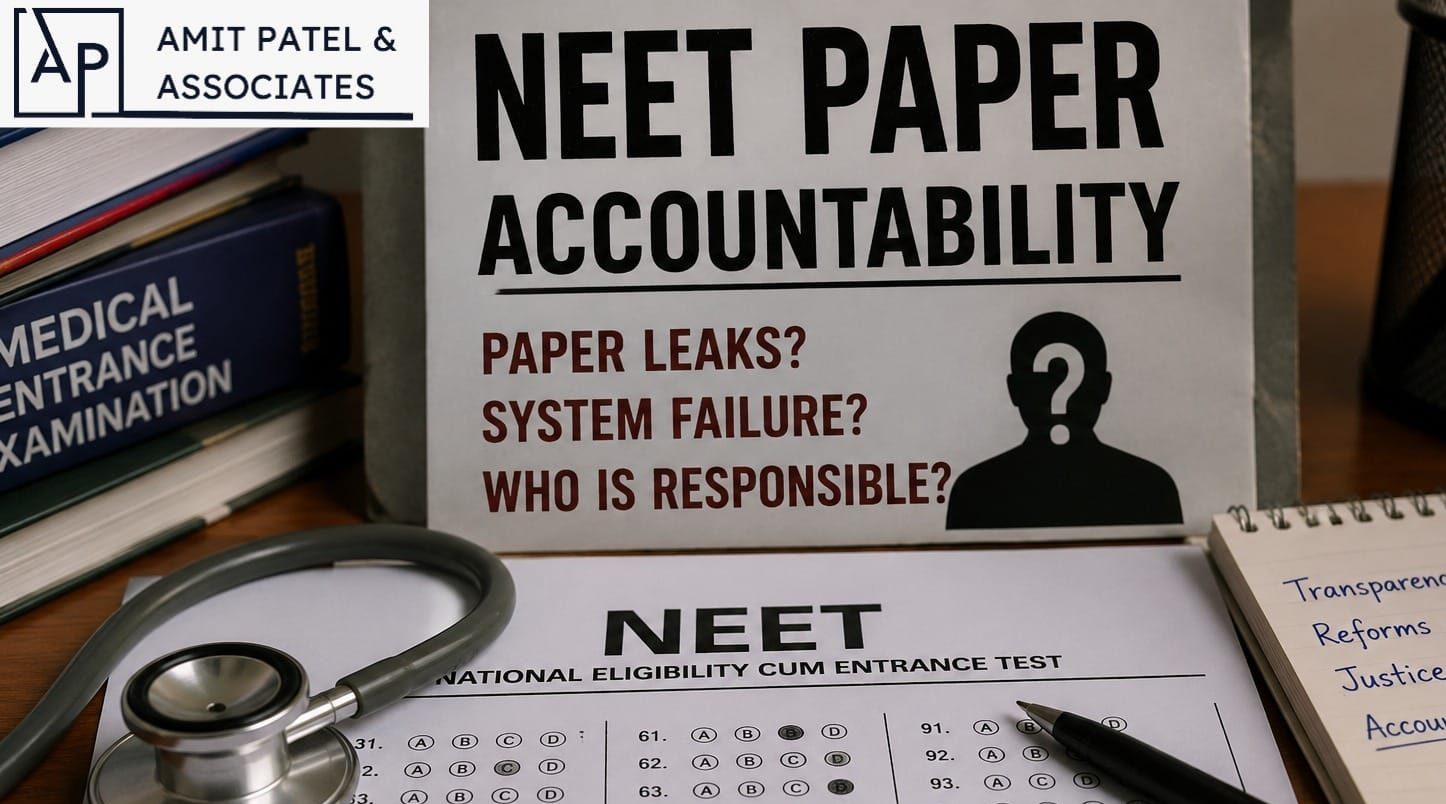
NEET-UG 2026 was conducted on May 3 for over 2.27 million aspirants. On May 12, the National Testing Agency cancelled it not on suspicion, but after a whistleblowing teacher matched 45 leaked Chemistry questions and 90 Biology questions, word-for-word, against the actual paper. CBI’s investigation into that leak turned up something more troubling than the leak itself: the NEET-UG 2025 paper had been compromised by the same racket.
This was not just a one-time security failure. It shows that a criminal network was able to break into the NTA’s system in two consecutive exam cycles, even after Parliament had passed a law to prevent such incidents. The government’s own statement about a “breach in the command chain” and its decision to conduct NEET through computer-based testing from 2027 indicate that it recognises the seriousness of the problem.
The question worth asking isn’t “who leaked the paper.” Bihar Police and CBI are already answering that one, with arrests across Bihar, Jharkhand, and Maharashtra. The question is: what happens to the institution whose repeated security failures let the same actors back in twice?
What the Public Examinations Act Actually Punishes
The Public Examinations (Prevention of Unfair Means) Act, 2024 was passed specifically in response to the 2024 NEET-UG and UGC-NET controversies assented to in February 2024, in force by that June. On paper, it’s serious legislation that imposes sentences of 3 to 10 years depending on the severity, fines of up to ₹1 crore for organised cheating rackets, and a four-year bar on institutions found to have conducted exams fraudulently.
The Act mainly targets people outside the examination system, such as paper leak gangs, impersonators, solver networks, coaching centres, and those involved in trafficking leaked question papers. Students are generally not prosecuted under the Act and instead face only administrative penalties. More importantly, the Act cannot be applied retrospectively. This means it cannot be used to punish those responsible for the 2024 NEET paper leak that led to its enactment, nor can it address the fact that the same criminal network allegedly breached the system again in 2025 and 2026.
This is the real accountability gap. The law punishes those who misuse leaked exam papers but does not create any responsibility for the authorities whose duty was to prevent the leaks in the first place. The NTA has been involved in every major exam controversy since at least 2021, yet the Act treats it only as a victim of these offences, not as an organization whose failures could also be examined or held accountable.
Where the Statute Could Reach the Institution: If Anyone Uses It
The Act also contains a provision that moves in the opposite direction. It requires service providers and institutional officials to report any exam malpractice they become aware of. Senior officials may even be held personally responsible if they fail to report it. If this provision is enforced properly, it is the only part of the 2024 Act that could hold officials within the NTA accountable including those in the chain of command that the Education Ministry itself admitted had suffered a breach.
The key question is whether this provision has ever been used against an NTA official, instead of only against outside contractors or service providers. The answer will show whether it is a genuine way to hold officials accountable or just a provision that exists on paper but is never enforced. So far, the available public information suggests that it has not been used against NTA officials.
Conclusion
The 2024 Act was introduced as the government’s solution to exam malpractice. However, within two years, the same criminal network allegedly managed to breach the system twice, while the law still does not clearly provide for holding institutions like the NTA accountable. Instead, it mainly focuses on prosecuting those involved in carrying out or benefiting from the leak. Unless this gap is addressed, the law will continue to punish the people involved in exam fraud without dealing with the institutional failures that allowed such incidents to happen in the first place.
References
The Public Examinations (Prevention of Unfair Means) Act, 2024
Need Legal Assistance?
If you need help with legal matters, our experienced team can guide you through the process and protect your rights.
Contact Us